“OsHV-1 Infection in the Pacific Oyster Magallana gigas: Current Insights and Challenges”
Benjamin Morga
Ifremer La Tremblade unité ASIM (Adaptation Santé des Invertébrés Marins)
The virus OsHV-1 is a pathogen that mainly affects oysters, particularly the species Magallana gigas (formerly Crassostrea gigas). It belongs to the family Malacoherpesviridae. This virus is responsible for high mortality rates in oyster larvae and juveniles. It was first detected in France in 1992. Infection outbreaks are often observed when water temperature increases in spring and summer (>16°C). OsHV-1 spreads easily in the marine environment, mainly through seawater and contact between individuals. Infection causes significant physiological disorders and can lead to massive mortality in aquaculture systems. The virus has a major economic impact on oyster farming in many countries. In 2008, a new variant called OsHV-1 µVar was identified and was found to be responsible for severe mortality events (70-100%). Since its emergence, this variant has become dominant in France. There is currently no curative treatment, but selective breeding programs for resistant oysters are being developed. Prevention mainly relies on monitoring, farm management, and environmental control.
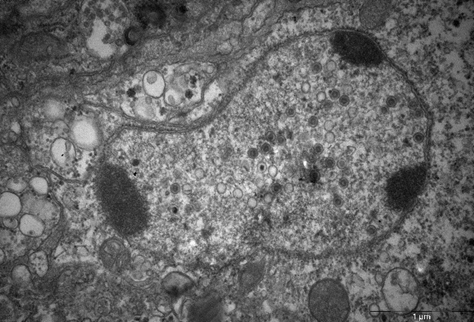
©Ifremer Bruno Chollet & Aurélie Dotto-Maurel